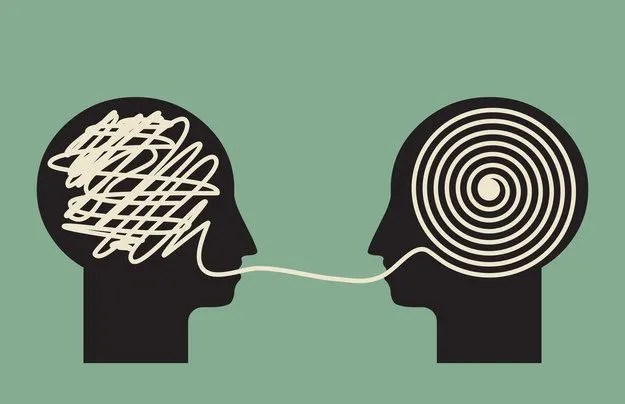
Communication is not just about talking — it’s about connection. In every meaningful exchange, we dance between expressing ourselves and truly hearing others.
Fred Kofman, in “The Dance of Communication”, reminds us that good communication is less about control. It is more about awareness. It also involves humility and curiosity.
Here’s how I’ve learned to apply this idea — from my leadership course at ESMT Berlin.
🌟 Step 1: Ask Yourself Before You Speak
Before any conversation begins, pause and reflect. These questions help me center my mindset — not just my message:
| 🌟 Focus | 🧠 Reflective Question | 💬 Purpose |
|---|---|---|
| 🎯 Intention | “What is my real purpose in this conversation?” | To clarify if you want to learn, solve, or just express. |
| 🤔 Assumptions | “What assumptions or judgments am I bringing into this talk?” | To reduce bias and stay open-minded. |
| ❤️ Attitude | “Am I ready to listen with empathy and respect?” | To remind yourself to stay calm and kind. |
| 🧩 Outcome | “What outcome would be meaningful for both of us?” | To focus on collaboration, not competition. |
| 🪞 Self-Awareness | “Am I speaking to learn or to win?” | To balance advocacy 🗣️ and inquiry ❓. |
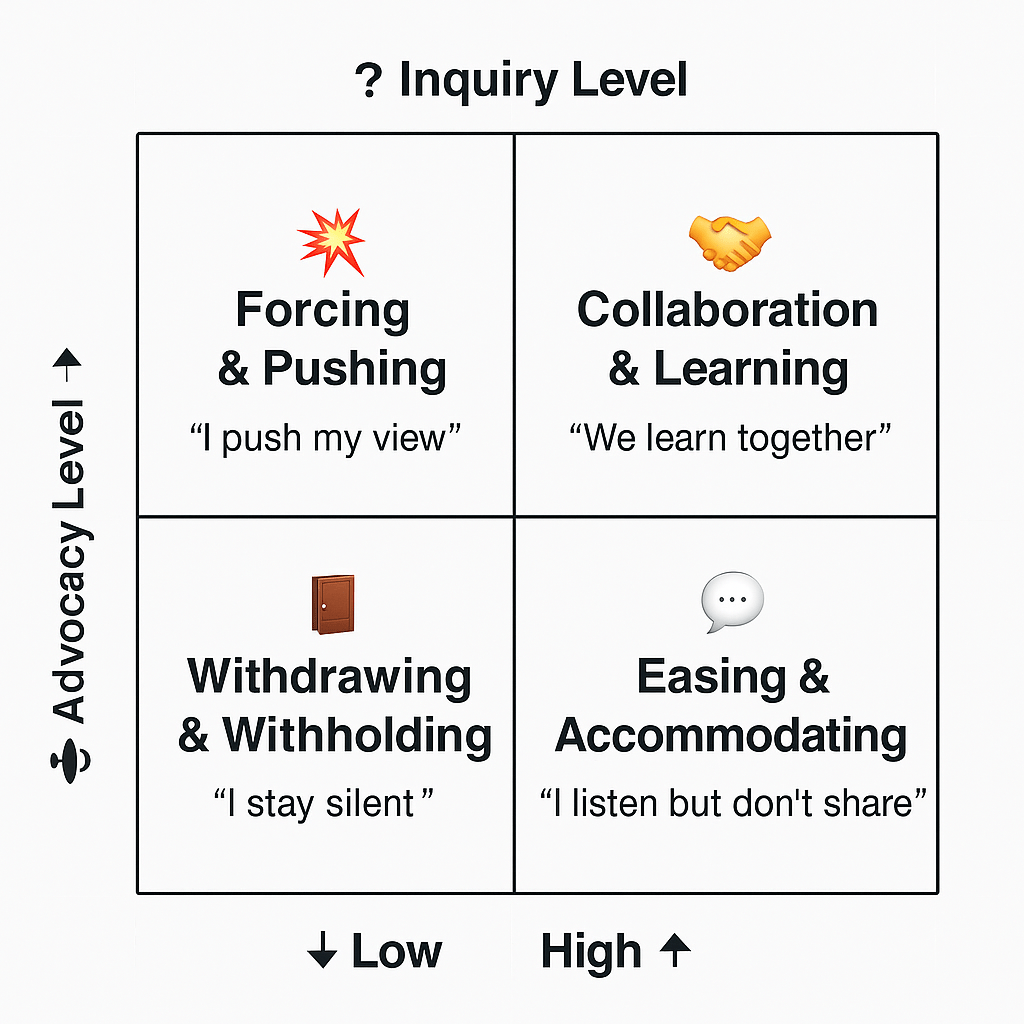
🧮 Step 2: Advocacy vs. Inquiry — Finding the Balance
Communication thrives when we share to learn (advocacy) and listen to understand (inquiry).
- Speak to learn, not to win 🧘♂️
- Balance advocacy 🗣️ and inquiry ❓
- Lead with humility 🙇, curiosity 🔍, and respect 🤝
🗣️ Step 3: Practice the Dance — Advocacy and Inquiry in Action
| 🌟 Topic | 💡 Core Idea | 🧭 Practice / Example |
|---|---|---|
| 🤝 1. The Power of Conversation | Conversations can change beliefs, perceptions, and actions. | Communicate with openness ❤️ and curiosity 🧠, not control 🔒. |
| 🚫 2. The Problem: Unilateral Control | People think “I’m right” 👑 and steer talks alone. | Focus on shared goals 🎯, not ego. Admit others may be right too 🤔. |
| ❌ 3. Symptoms of Control | – Speak without reasoning 🗣️- Ask rhetorical questions 🎭- Hide your true views 🙊 | Be transparent 🪞 with logic, data 📊, and uncertainty ❓. |
| 🌱 4. Productive Mindset | “We need to learn together — I might be wrong.” | Shift from winning 🏆 to learning 📚. |
| 📣 5. Productive Advocacy | Express ideas clearly and humbly 🙇. | – Show reasoning 🧮 & data 📑- Admit doubt 😌- Invite feedback 👂 |
| 👥 Example | ❌ “We should hire Bill.”✅ “I think Bill fits better because of his experience — but I’d like your thoughts.” | Encourage dialogue 💬 and shared judgment ⚖️. |
| 🔍 6. Productive Inquiry | Listen with curiosity 👂 and without judgment 🚫. | – Explain why you ask 💬- Ask open questions ❓- Check understanding ✅ |
| 💭 Good Questions | “What led you to that view?”“How do you see my role?”“Can you give an example?” | Build trust 🤝 through genuine curiosity ❤️. |
| ⚖️ 7. Balance Both | Only advocacy = forcing 💥Only inquiry = hiding 🤐Both = collaboration 🤝 | Share 🗣️ + Listen 👂 = Learn together 📚. |
| 🧮 Advocacy vs. Inquiry Matrix | High + High → 🤝 Collaboration & Learning High + Low→ 💥 Forcing Low + High → 🕊️ Accommodating Low + Low → 🚪 Withdrawing | Balance words ⚖️ and questions ❓ for growth 🌱. |
| 🧩 8. Handling Impasse | When stuck 😕, state the dilemma openly 🗣️ and ask for help 🆘. | – Ask what might change their view 🔄- Try new data or role switch 🔁- Co-create solutions 💡 |
| 🪞 9. Reflection Questions | 1️⃣ What’s my intention? 🎯2️⃣ Learning or winning? 🧠3️⃣ What are my assumptions? 💭4️⃣ What truly matters? ❤️ | Ask these before each important talk 🗣️. |
Final Thought: The real skill in communication isn’t speaking well — it’s listening beautifully. Speak with intention 🎯, listen with curiosity 🔍, and lead with respect 🤝.
 Qunfei@Data, ML and AI Architecture
Leave a comment